
Transforming innovation into commercial success.
Innovation creates value only when it reaches the market successfully. From early innovation programs to sustaining stewardship, we partner across the entire product lifecycle — accelerating commercialization, improving manufacturing efficiency, reducing total cost of ownership, and creating long-term competitive advantage.
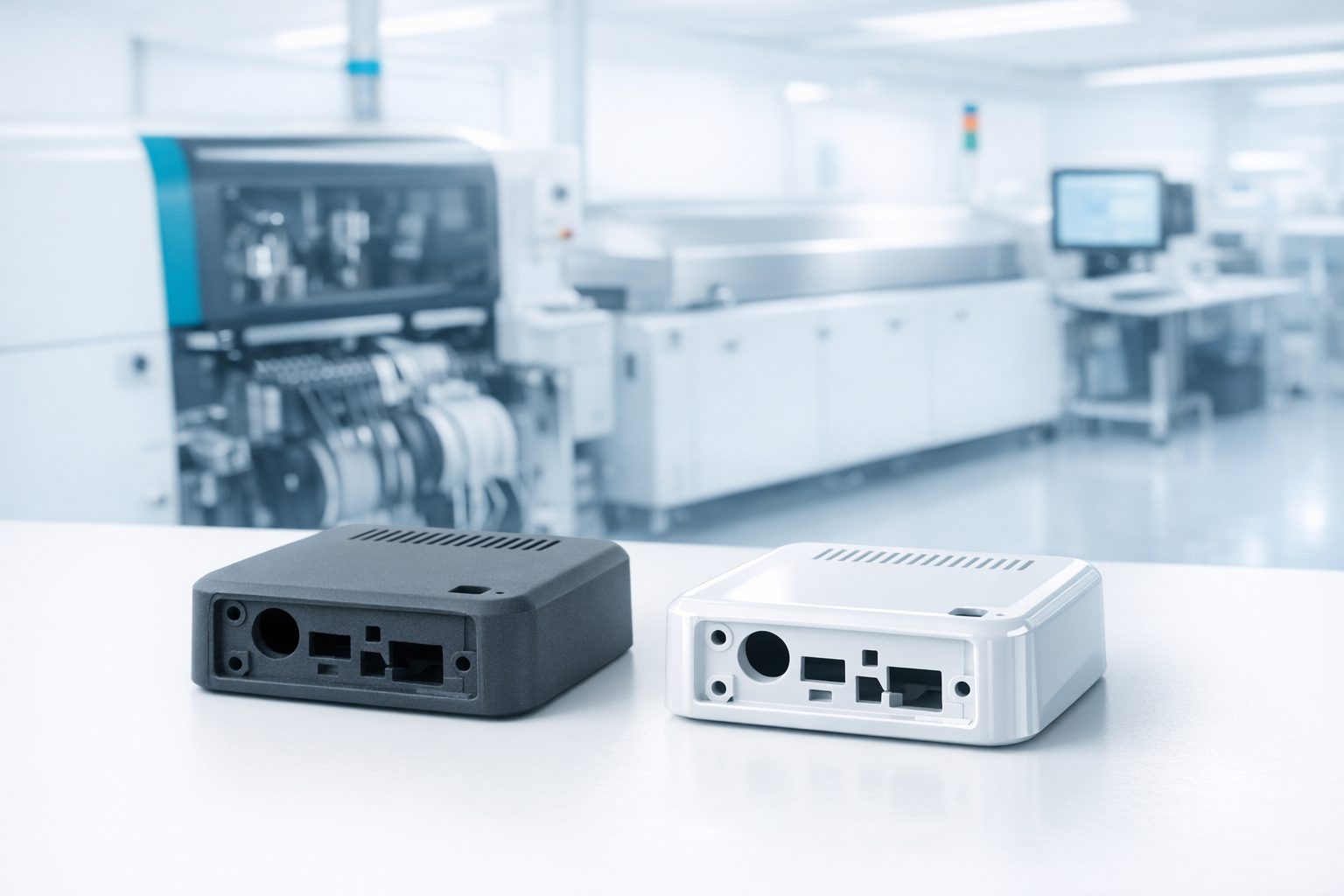
Across industries and lifecycles, Heideson has delivered numerous innovation and sustaining programs worldwide.
The following case studies represent just two examples of how we transform engineering excellence and supply-chain expertise into measurable business impact.
Next-gen wearable device platform.
Accelerating product commercialization. By integrating accelerated product development with Design for Six Sigma, we cut development time by 25% and lifted all six critical KPIs.
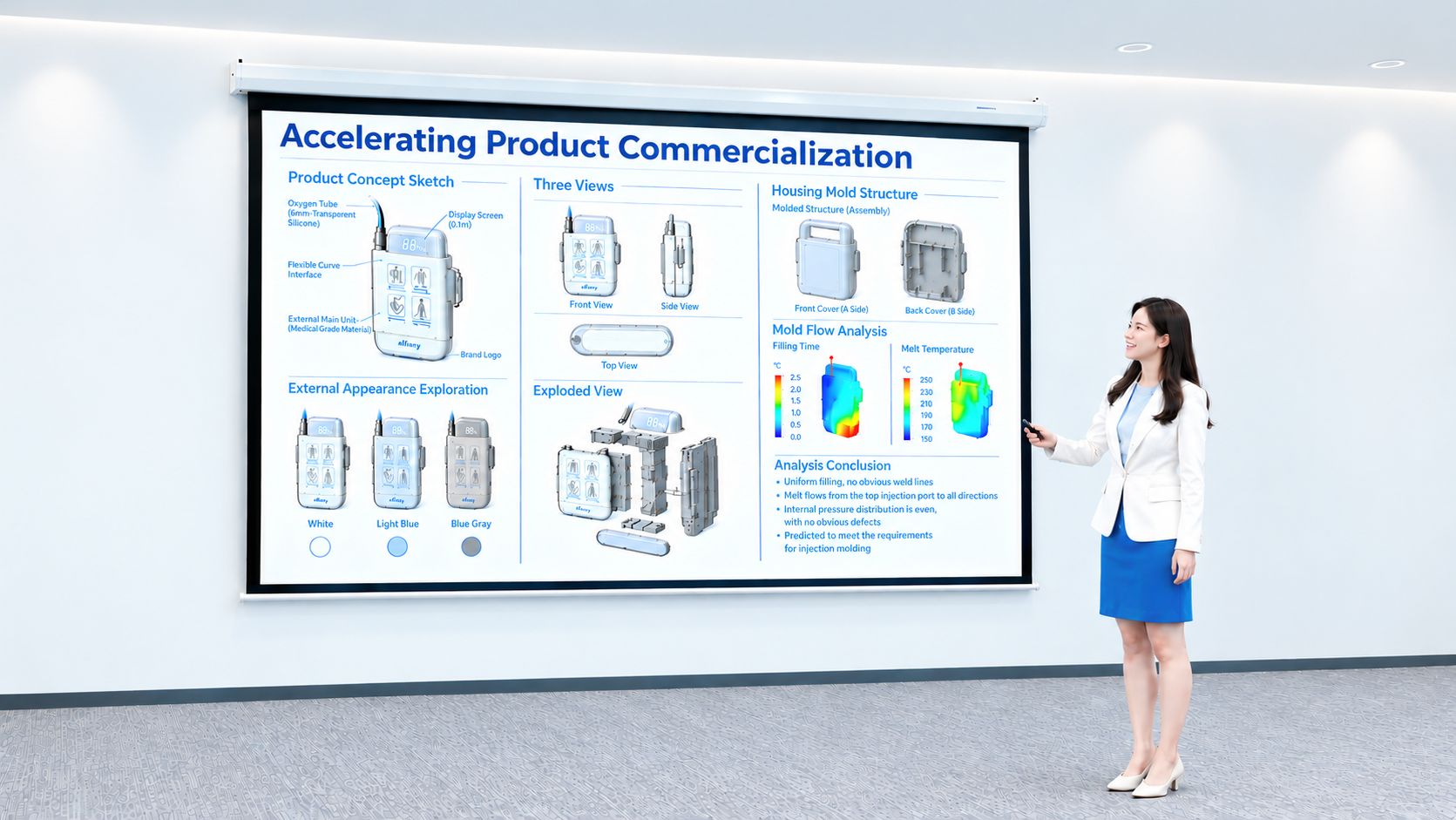
Project scope
- End-to-end support for a global consumer-electronics company developing a next-gen wearable device.
- Full lifecycle from concept development through manufacturing ramp-up and commercialization.
Business objectives
- Accelerate time-to-market while optimizing total product cost.
- Improve manufacturability and increase manufacturing productivity.
- Build a synchronized global supplier ecosystem.
Our responsibilities
- Global sourcing of MCU, LED display, FPC, PCBA, magnesium thixomolding & key components.
- Supplier qualification, BOM cost optimization, DFM support & process optimization.
- Tooling development, material readiness, engineering validation & supplier synchronization.
Implementation approach
- Early supplier engagement with strategic component sourcing and DFM-driven optimization.
- Prototype and engineering validation, then material readiness for ramp-up.
- Manufacturing productivity improvement with comprehensive ramp-up support.
Key challenges
- Aggressive launch schedule with complex over-molding and tight cosmetic/dimensional tolerances.
- SMT yield stabilization alongside global supplier synchronization.
- Manufacturing scalability requiring systematic process control.
Value created
- Early supplier engagement optimized BOM cost before design freeze and improved manufacturability.
- Proactive risk identification reduced iterations and accelerated industrialization.
- A scalable foundation enabling successful global commercialization.
An early strategic supply-chain partner.
Heideson engaged as an early strategic supply-chain partner, with responsibilities spanning the entire development lifecycle. The business objectives rested on five pillars: accelerating time-to-market, optimizing total product cost, improving manufacturability, increasing manufacturing productivity, and building a synchronized global supplier ecosystem.
Implementation followed a structured seven-phase methodology, from early supplier engagement through strategic sourcing, prototype validation and production ramp-up support. Engaging suppliers in the concept phase let us optimize BOM cost before design freeze, synchronize global suppliers and identify manufacturing risks at the earliest stage, which meant fewer engineering iterations and faster industrialization.
Designed to scale, built to excel.
Systematic design excellence — quality, efficiency, cost and speed. Optimized design drives faster speed, higher yield, and lower cost from day one.
Over-molding yield via optimized mold design, bonding materials and multi-stage process control with real-time monitoring. SMT +10% via stencil, reflow and AOI-feedback optimizations.
20% compressed development cycle; 60% fewer late-cycle changes through concurrent engineering, modular design, DFM, rapid prototyping and early HALT; modular tooling cut lead time by 20%.
A 26% reduction in production cycle time translated to ~35% productivity gain at zero incremental capex.
COGS decreased through dual-track optimization of supply-chain sourcing and design-for-cost engineering.
The customer launched the product three months ahead of schedule — with significantly higher manufacturing yields, lower total product cost, improved productivity, and a globally synchronized supplier network capable of supporting rapid commercialization.
Medical device value-engineering program.
Maximizing product lifecycle value. Upgrading competitiveness in the sustaining phase — a globally replicable model proving that cost competitiveness and supply resilience reinforce each other.
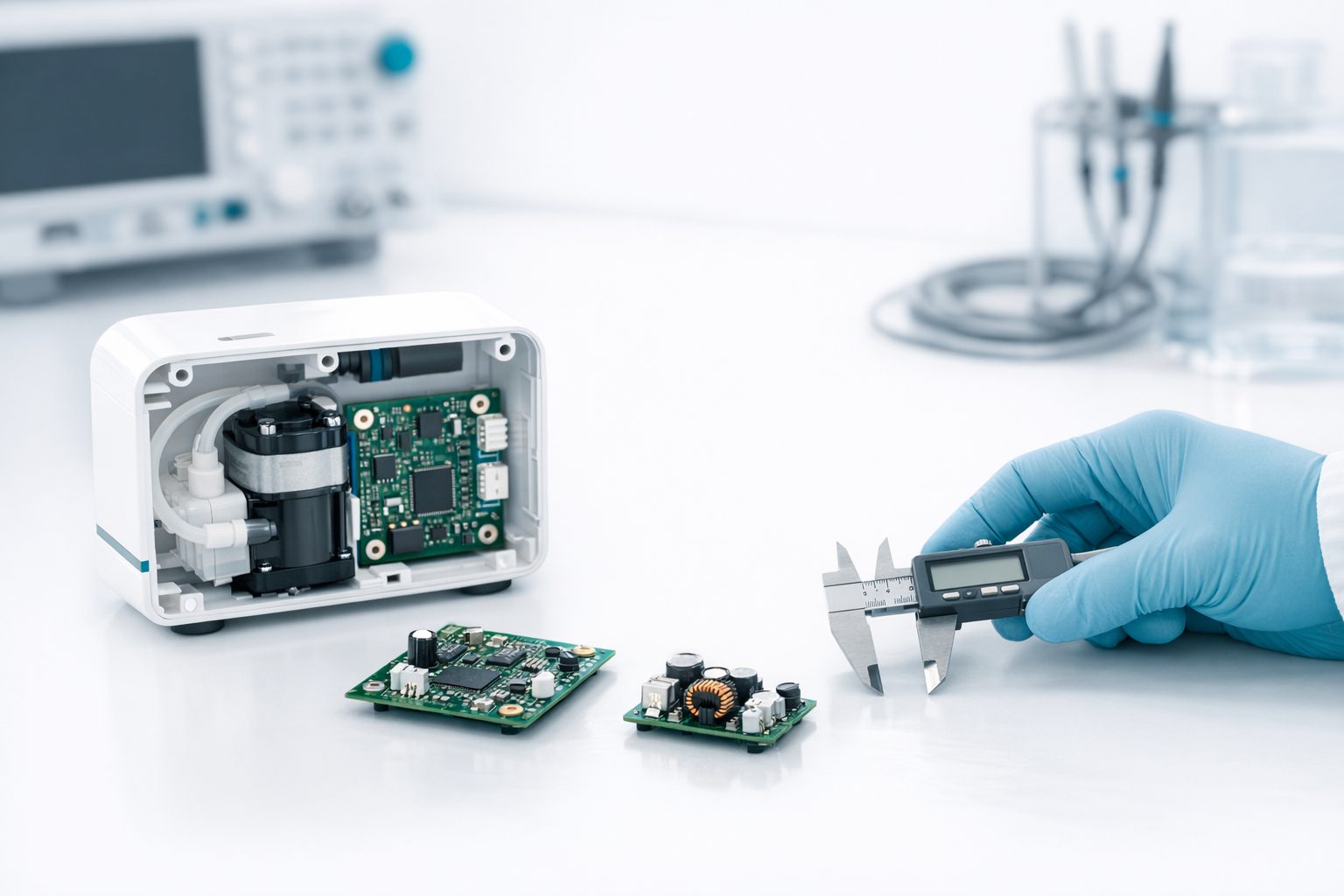
Project scope
- Support global medical-device manufacturers in enhancing profitability, strengthening supply continuity and maximizing product lifecycle value through strategic engineering initiatives.
Business objectives
- Enhance product profitability.
- Reduce total cost of ownership (TCO).
- Increase manufacturing flexibility.
- Strengthen supply continuity & extend lifecycle.
Our responsibilities
- Lead continuous improvement: Feature Value Analysis, cost breakdown, value engineering.
- Dual sourcing, alternative component qualification, lifecycle management.
- Strategic sourcing for LDOs, PCB, pumps, assembly and more.
Implementation approach
- Product cost baseline and Feature Value Analysis.
- Value engineering and supplier market assessment.
- Engineering validation, production transition and KPI monitoring.
Key challenges
- Regulatory compliance & documentation.
- Maintaining product reliability.
- Cost optimization without performance loss.
- Rigorous supplier qualification and long-term supply continuity.
Value created
- Optimized the product value proposition.
- Sustainable cost reductions and improved manufacturing flexibility.
- Reduced supply risk and enhanced market competitiveness.
Systematic sourcing excellence — capacity, cost, flexibility.
Four strategies built a cost-competitive, resilient supply chain that serves as a replicable global manufacturing model.
Feature Value Analysis maximized value with full functional equivalence; DFM before design freeze enabled material substitution and process simplification.
Secondary supplier qualification eliminated single-source dependency across all critical components; supplier consolidation, competitive bidding and alternative-material qualification (LDOs, PCBA, pumps) cut material cost 6%.
Minimum order quantity reduced 30%, lowering inventory capital exposure for demand-responsive planning.
Combined design and sourcing optimization delivered a 14% BOM reduction, lifting profitability by 2.8 percentage points.
Through engineering-driven value engineering and strategic sourcing, the customer achieved sustainable cost leadership, enhanced supply resilience, improved manufacturing flexibility and stronger long-term competitiveness — without compromising product quality or regulatory compliance.
Turn your roadmap into measurable results.
Whether you're launching a new platform or sustaining a mature product line, we'll bring engineering, sourcing and manufacturing expertise to the table.